Carnevale: quando gli eccessi sono concessi.
Carnival: the time for indulgence
This is an Italian–English Bilingual Article to Improve Your Reading Skills.
Cominciamo dal significato della parola Carnevale, che ci svela subito un pezzo della storia che sto per raccontarti. Carnevale deriva dal latino carnem levare, cioè letteralmente “eliminare la carne”: uno dei cibi più ricchi e prelibati, a cui bisognava rinunciare prima della Pasqua nella tradizione cristiana.
Let’s start with the meaning of the word Carnival, which immediately reveals an important part of the story I’m about to tell you. The word Carnival comes from the Latin carnem levare, which literally means “to remove meat”: one of the richest and most prized foods that, according to Christian tradition, people were expected to give up before Easter.
Il Carnevale segna quindi l’ultimo grande momento di festa e abbuffate prima dei 40 giorni di digiuno e astinenza pre-pasquali, noti come Quaresima. I brasiliani, a quanto pare, hanno preso questa regola più sul serio di chiunque altro: hanno trasformato il Martedì Grasso — il giorno prima del Mercoledì delle Ceneri, primo giorno di Quaresima — in un vero e proprio spettacolo esplosivo! Il Carnevale è già di per sé un tripudio di colori, musica, maschere e costumi scintillanti, ma a Rio raggiunge la sua apoteosi: la forma più sfrenata e spettacolare di questa tradizione.
Carnival therefore marks the last great moment of feasting and indulgence before the forty days of fasting and abstinence leading up to Easter, known as Lent. Apparently, Brazilians took this rule more seriously than anyone else: they turned Shrove Tuesday — the day before Ash Wednesday, the first day of Lent — into a truly explosive spectacle!Carnival is already a riot of colours, music, masks and sparkling costumes, but in Rio it reaches its apotheosis: the most exuberant and spectacular expression of this tradition.
Lasciamo il Brasile per tornare nella patria del Carnevale: l’Italia, dove già dal IV secolo a.C. i Romani si mascheravano, ballavano, banchettavano e organizzavano grandi feste che coinvolgevano tutta la comunità. Per gli schiavi, era addirittura l’unico momento in cui potevano sentirsi liberi e sedere come ospiti ai banchetti dei loro padroni.
Let’s leave Brazil and return to the homeland of Carnival: Italy, where as early as the 4th century BC the Romans were already wearing masks, dancing, feasting and organising large celebrations that involved the entire community. For enslaved people, it was actually the only time of year when they could feel free and even sit as guests at their masters’ banquets.
All’epoca non si chiamava ancora Carnevale: queste feste erano i Saturnali, dedicate a Saturno, dio dei semi, dei campi e della fertilità, ma anche legato al tempo e all’ordine sociale. Il Carnevale diventò una festa cristiana gradualmente, tra il Medioevo e il Rinascimento, mantenendo inalterati tanti elementi delle celebrazioni romane.
At the time, these celebrations were not yet called Carnival: they were known as the Saturnalia, festivals dedicated to Saturn, the god of seeds, agriculture and fertility, but also associated with time and social order. Carnival gradually became a Christian festival between the Middle Ages and the Renaissance, while preserving many elements of the ancient Roman celebrations.
Il periodo di Carnevale inizia subito dopo l’Epifania e si conclude con il Martedì Grasso, una data che varia di anno in anno. Per la maggior parte delle città italiane, i momenti centrali della festa sono tre: il Giovedì Grasso, la domenica di Carnevale e, infine, il Martedì Grasso, quando piazze e strade si riempiono di maschere, colori, coriandoli e stelle filanti, tra decorazioni e sfilate di carri di cartapesta.
The Carnival season begins just after Epiphany and ends on Shrove Tuesday, a date that changes every year. In most Italian cities, the heart of the celebrations revolves around three key moments: Shrove Thursday, Carnival Sunday and, finally, Shrove Tuesday, when squares and streets fill with masks, colours, confetti and streamers, along with decorations and papier-mâché float parades.
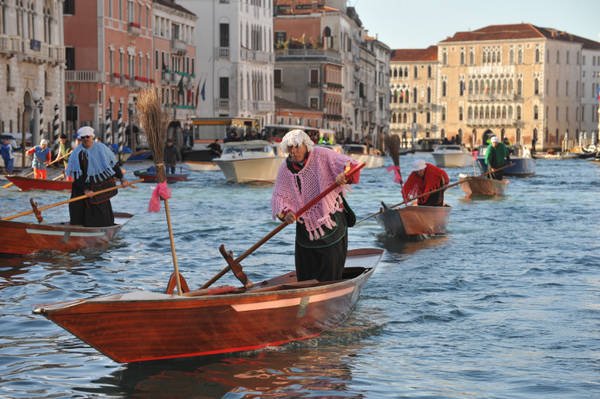
A distinguersi sono i Carnevali storici d’Italia, ognuno con caratteristiche uniche.
What truly stand out are Italy’s historic Carnivals, each with its own distinctive character.
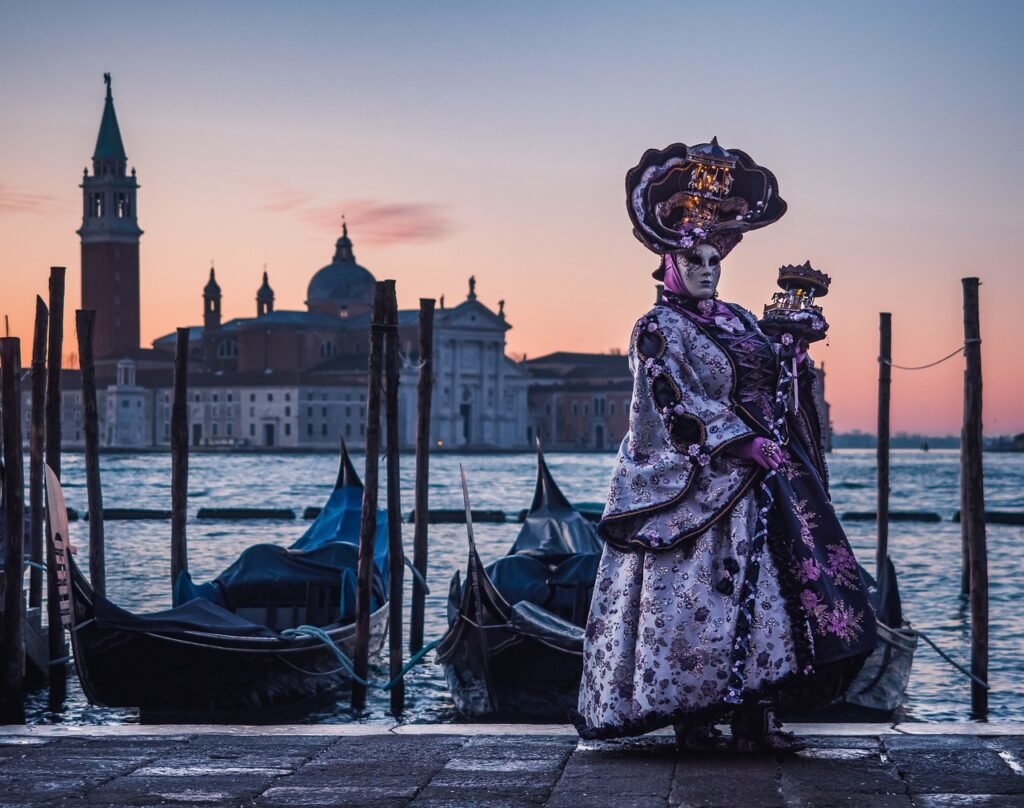
Carnevale di Venezia (Veneto – documentato dal 1094)
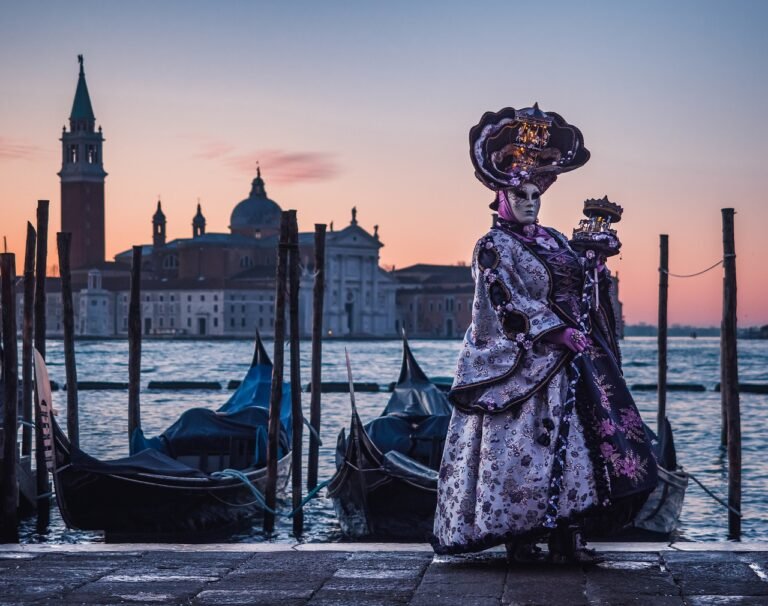
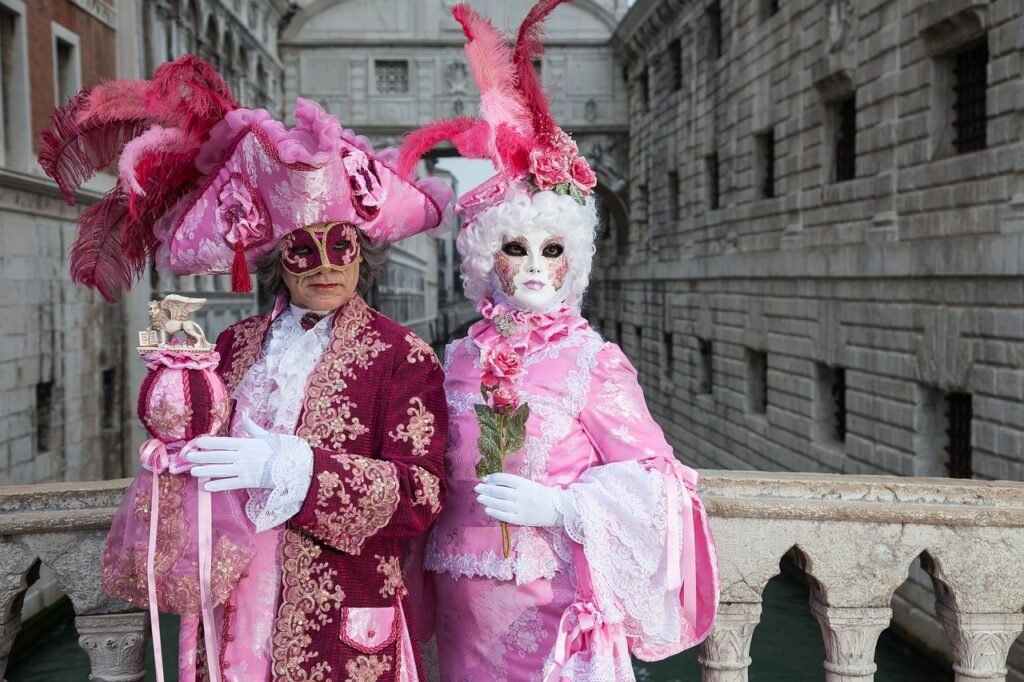
È famoso in tutto il mondo per le sue maschere eleganti, i costumi settecenteschi e l’atmosfera raffinata che trasforma la città in un grande teatro a cielo aperto.
Carnival of Venice (Veneto – documented since 1094)
World-famous for its elegant masks, eighteenth-century costumes and refined atmosphere that turns the city into a vast open-air theatre.
Carnevale di Viareggio (Toscana – dal 1873)
Celebre per i suoi enormi carri allegorici di cartapesta, spesso satirici e ispirati all’attualità politica e sociale.
Viareggio Carnival (Tuscany – since 1873)
Renowned for its enormous papier-mâché allegorical floats, often satirical and inspired by current political and social events.
Carnevale di Putignano (Puglia – dal 1394)
È uno dei Carnevali più antichi d’Europa e anche uno dei più lunghi: inizia già a gennaio con feste, sfilate e riti tradizionali.
Putignano Carnival (Puglia – since 1394)
One of the oldest Carnivals in Europe and also one of the longest, starting as early as January with celebrations, parades and traditional rituals.
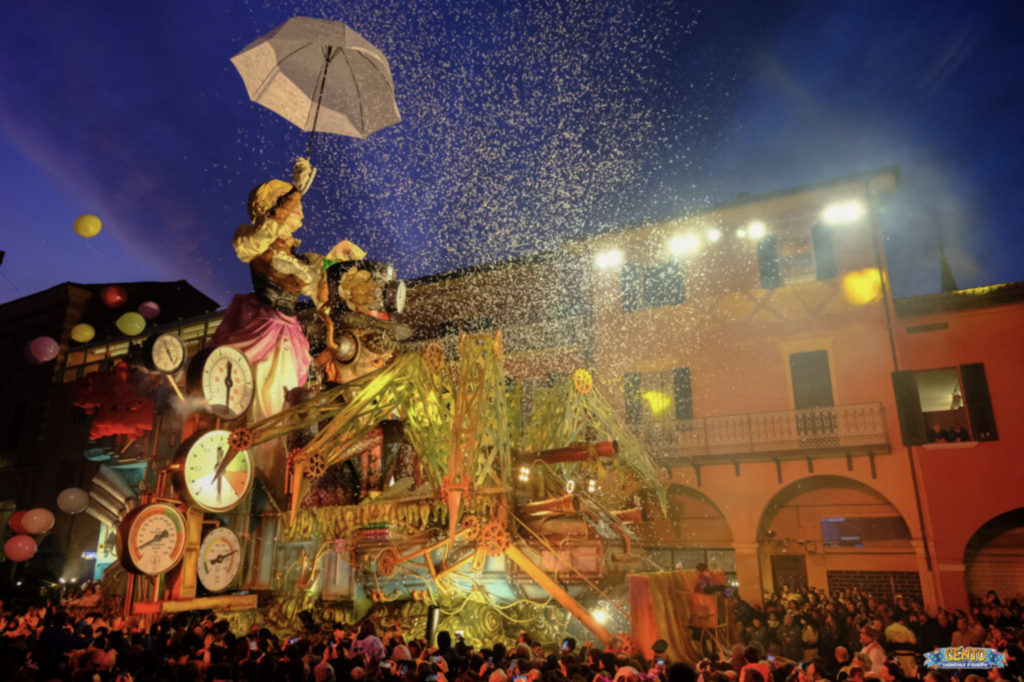
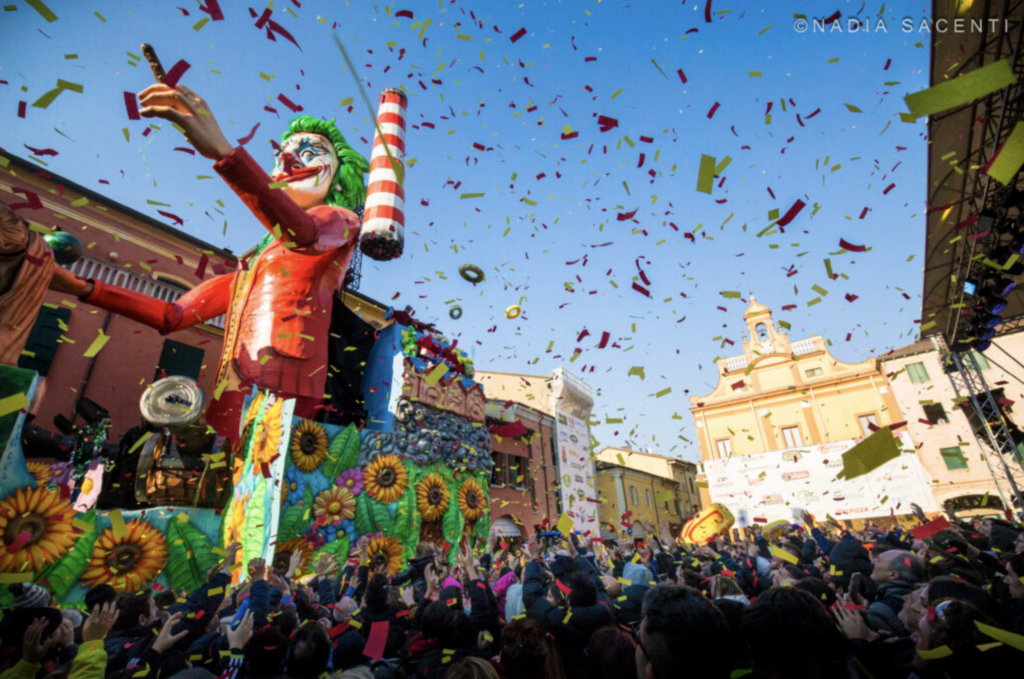
Carnevale di Cento (Emilia-Romagna – documentato dal 1615)
È noto per il suo legame storico con il Carnevale di Rio de Janeiro e per i carri spettacolari e la grande partecipazione popolare.
Cento Carnival (Emilia-Romagna – documented since 1615)
Known for its historical link with the Rio de Janeiro Carnival, as well as its spectacular floats and strong popular participation.
Carnevale di Fano (Marche – dal 1347)
Si distingue per il “getto”, il lancio di dolci e caramelle dai carri verso il pubblico, una tradizione unica nel suo genere.
Fano Carnival (Marche – since 1347)
Famous for the getto, the throwing of sweets and candies from the floats into the crowd — a truly unique tradition.
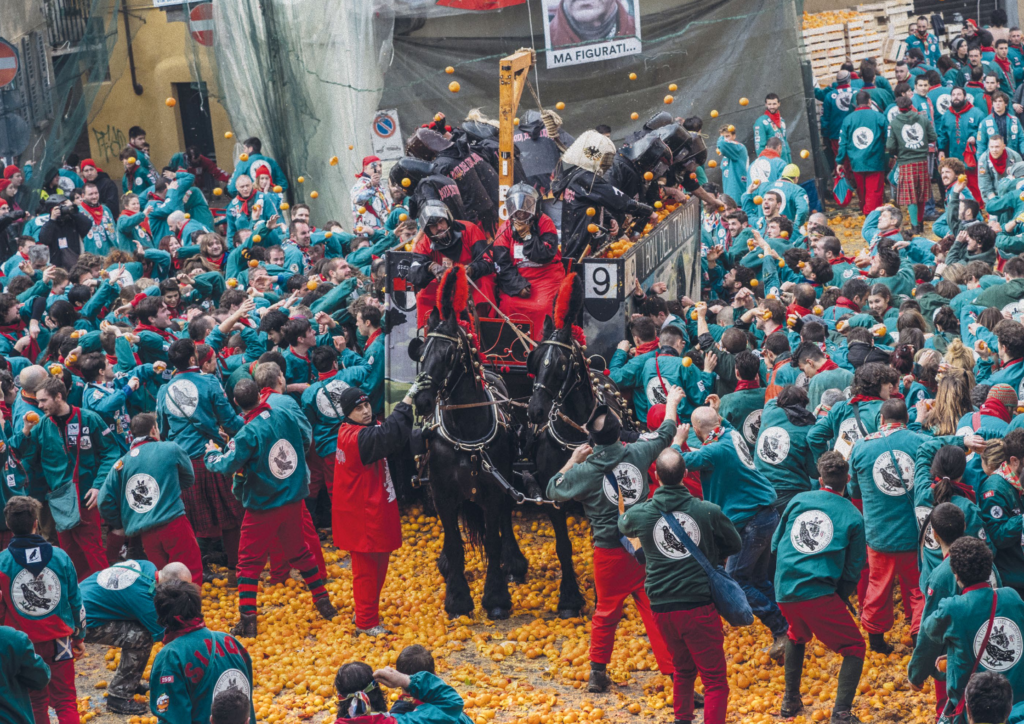
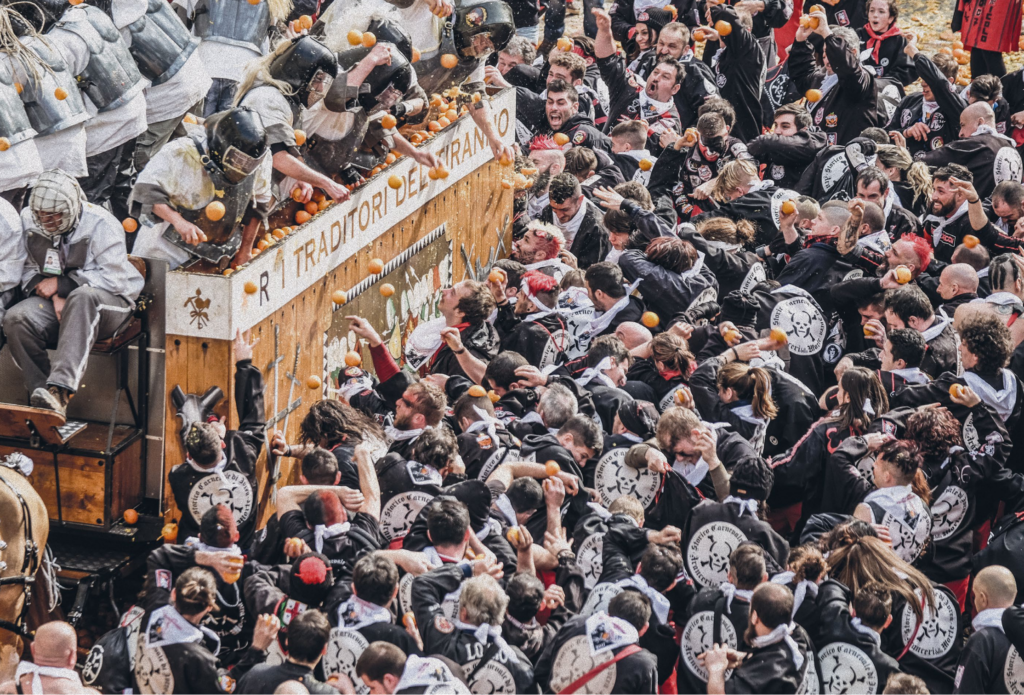
Carnevale di Ivrea (Piemonte – dal 1808)
È famoso per la Battaglia delle Arance, una rievocazione storica che simboleggia la ribellione del popolo contro il potere tirannico.
Ivrea Carnival (Piedmont – since 1808)
Best known for the Battle of the Oranges, a historical reenactment symbolising the people’s rebellion against tyrannical power.